Chaimas Frenkelis Villa-Museum
 Venclauskiai House-Museum
 Šiauliai History Museum
 Photography Museum
 Bicycle Museum
 Radio and Television Museum
 Žaliūkiai Village Miller’s Farmstead-Museum
NEWS
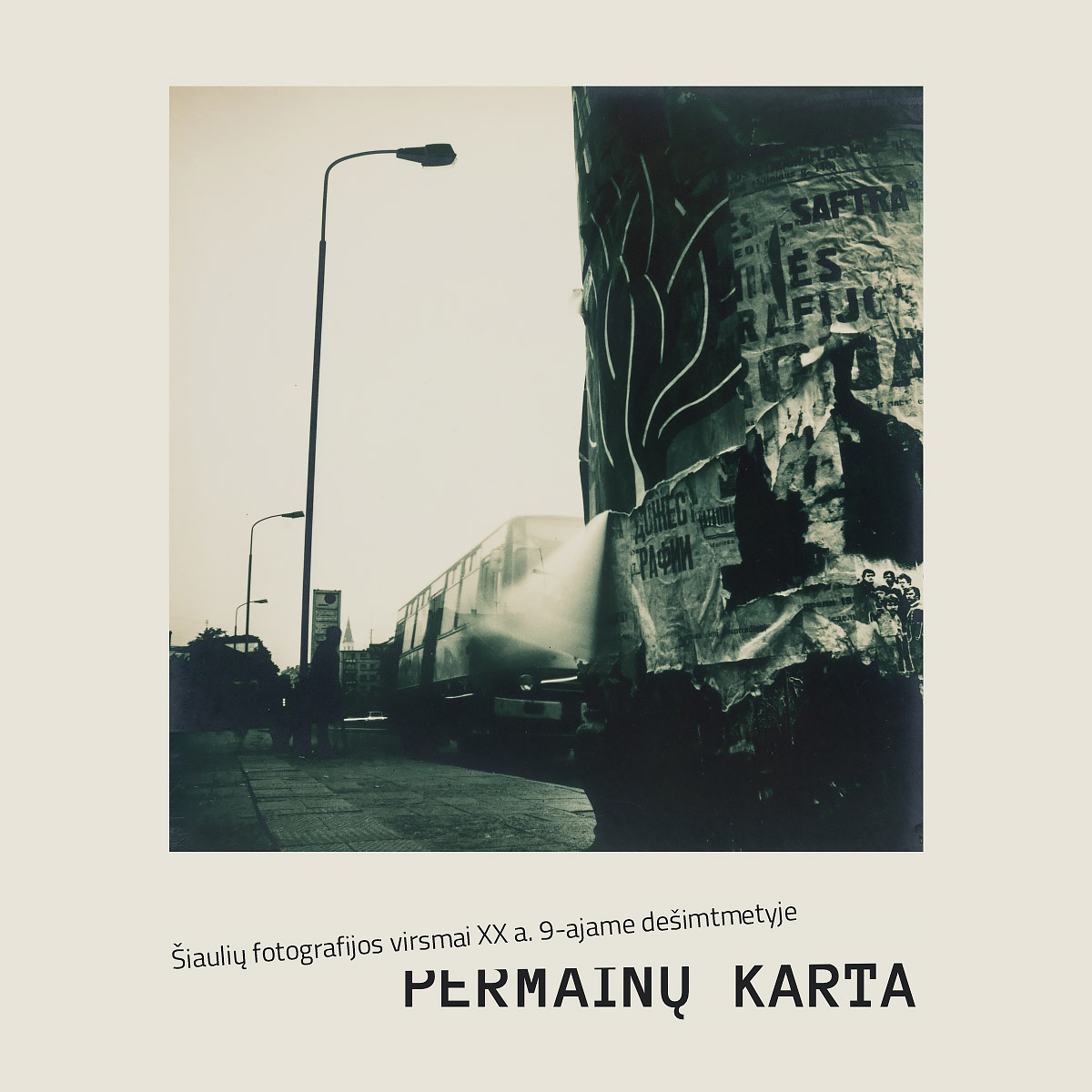
Generation of Change: Transformations in Šiauliai’s Photographic Scene in the 1980s
Generation of Change: Transformations in Šiauliai’s Photographic Scene in the 1980s
On May 15, 2026 at 6:30 p.m., the exhibition “Generation of Change: Transformations in Šiauliai’s Photographic Scene in the 1980s” opens at the Photography Museum, running until July 26, 2026. The curator of the exhibition is Vilija Ulinskytė-Balzienė.
The 1980s are considered the beginning of a new creative wave in Lithuanian photography. That year, at the Exhibition Hall of the Lithuanian SSR Society of Photographic Art (hereafter – FMD) in Vilnius, the 3rd Exhibition of Young Lithuanian Photographers (also shown in Šiauliai in 1981) revealed new aesthetic attitudes that departed from the then-dominant documentary approach. These new directions highlighted the distinctive worldview of a new generation of photographers, who boldly expressed it through a new photographic language characterized by conceptualism, technological awareness, a tendency toward anti-aesthetics, self-reflection, the poetics of everyday monotony, fragmentation, and an ironic relationship with their surroundings.
These tendencies were also reflected in the work of young Šiauliai photographers participating in the exhibition – Arūnas Vileikis (b. 1954) and Algimantas Vaivada (b. 1953). Vileikis already had exhibition experience and had been a candidate member of the FMD since 1979 (full member since 1982), while this was Vaivada’s debut exhibition. These two creators represented a small yet distinctive and progressive creative community forming in Šiauliai, one that turned away from traditional photographic expression and sought an individual creative path. Most of them were born in the 1950s and were only beginning their professional and artistic careers.
At that time, albeit not publicly, one of the most prominent Šiauliai photographers of the decade, Klemas Jankūnas (b. 1953), was consistently experimenting in the field of avant-garde photography. A principled nonconformist, bold, sharp, and technologically skilled creator, he attracted even the most notable Lithuanian photographic innovators of the time to Šiauliai to learn from his experience. An acquaintance with Jankūnas, formed during service in the Soviet army, led Algimantas Vaivada, originally from Tauragė, to settle in Šiauliai and connect his life with the city. Here, the creative and ideological collaboration among like-minded authors continued for more than a decade. Although it did not evolve into a formal creative duo, it left thematic, aesthetic, and technological connections in their work.
Working rather privately, engaging in extensive discussions and reflections, but sparingly presenting their work publicly, these authors created cohesive series of avant-garde works with a refined style. More comprehensive presentations of their work in solo exhibitions were organized relatively late, at the end of the 1980s and the beginning of the 1990s.
By the mid-1980s, the ranks of young Šiauliai photography enthusiasts were joined by Kęstutis Bingelis (b. 1954), Vidmantas Patamsis (b. 1959), Albinas Mataitis (b. 195?), Jonas Kaučikas (b. 1954), and other creators. Many of them gathered around Arūnas Vileikis, who from 1984 served as the executive secretary of the Šiauliai branch of the FMD and actively participated in exhibition activities in Lithuania and abroad. The vibrant photographic life of the city—centered around the Photography Museum and the Photography Salon of the Šiauliai branch of the Society, opened in 1984—along with creative gatherings, lectures, exhibition discussions, and trips to the Nida photographers’ seminars, became an important creative environment for the younger generation, a space for experimentation and exchange of ideas.
Although he remained somewhat apart, the already recognized photographer Aleksandras Ostašenkovas (b. 1951), known for his distinctive style, was ideologically close to the young community through his individualism and anti-traditional creative expression. A member of the FMD since 1976, he was a well-known artist not only in Lithuania but also internationally, having been selected multiple times to represent Lithuanian photography abroad. At the turn of the 1970s and 1980s, his sensitive philosophical creative direction emerged, today described as the “aesthetics of boredom,” which became a distinctive phenomenon of Šiauliai photography and an important part of the city’s cultural identity.
Vaidotas Kisielis (b. 1953), who headed the Photography Museum, was more engaged in organizational matters than in creative work. Janina Siliūnaitė (b. 1948) cautiously exhibited her works, while Juozas Bindokas (b. 1951) experimented with new interpretations of the nude genre.
After 1990, following the restoration of Lithuanian independence, most photographers of this generation (with the exception of Ostašenkovas) withdrew from active creative photographic practice. Thus ended a short yet significant and distinctive stage in the history of Šiauliai photography. Over the decades of independence, the alternative creative output of this period was rarely exhibited and little studied. It was more broadly reviewed within the context of Lithuanian photographic art development in the Photography Museum’s collection exhibition “Collection” in 2015 (curators Vilija Ulinskytė-Balzienė and Rolandas Parafinavičius).
This period has been revisited again since 2024, when the Photography Museum initiated the event cycle “New Encounters with Old Acquaintances” (coordinator Viktoras Gundajevas), which continues to this day. In preparing presentations, authors’ biographies are researched, archives are examined and digitized, and the museum’s collection is supplemented with works. Part of the works presented in the exhibition “Generation of Change. Transformations in Šiauliai Photography in the 1980s,” preserved for decades in the authors’ archives, will also become part of this collection.
The exhibition presents exclusively original photographic prints from the time the works were created, most of them mounted with authentic mats produced by the authors themselves. Many prints are unique, created using toning, virage, montage, and other photographic techniques.
The exhibited works come from the collections of the Photography Museum, the Lithuanian Photographers’ Association, and the archives of Arūnas Uogintas, Klemas Jankūnas, Algimantas Vaivada, Kęstutis Bingelis, Vidmantas Patamsis, Arūnas Vileikis, and Albinas Mataitis.
Exhibition curator – Vilija Ulinskytė-Balzienė
Exhibition communication designer – Darius Linkevičius
Organiser – The branch of the Šiauliai Aušra Museum – the Photography Museum